

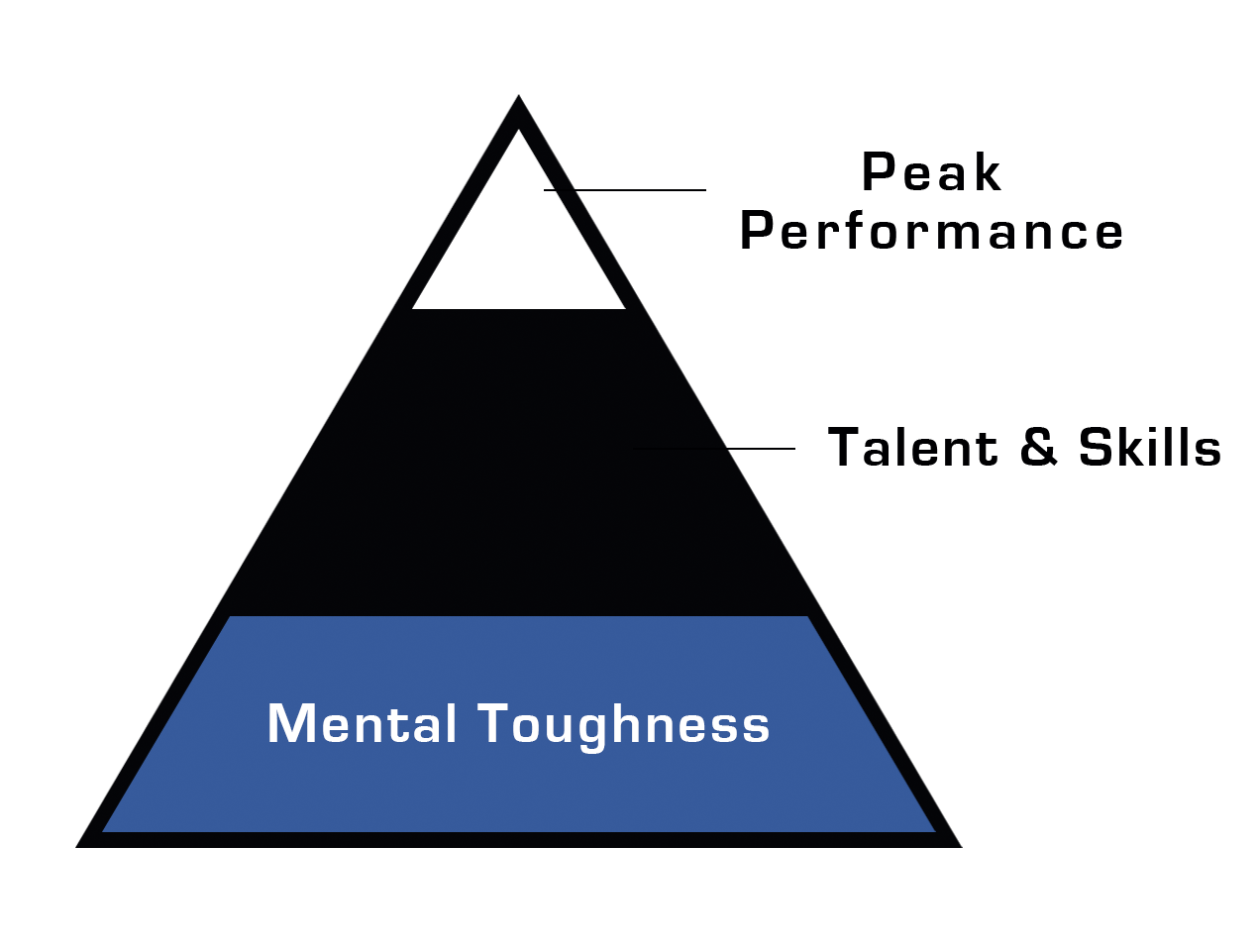
Mental Toughness is the Foundation of Peak Performance
Mental toughness is the foundation that allows an athlete full access their talent and skill for peak performance under pressure.
Elite athletes are built through stress and recovery cycles that expand the availability of their full talent regardless of circumstances.
At HPT, we elevate athletes by developing their mental skills and raising their nervous system’s capacity to perform under stress and win consistently.
"Peak performance under any circumstance"
What Our Training Looks Like
Vic will be fully committed your progress and partnership.
We prioritize athlete well-being in an impartial and safe environment where they can express themselves.
An initial assessment that identifies the client’s individual needs and goals.
Weekly sessions, goal setting and even on-site support options.
The use of psychology and neuroscience backed skills and tools to raise levels of performance in any sport.
A collaborative and positive environment where coach and athlete work as a team
A coach-athlete alliance built on trust and accountability that develops the athlete’s autonomy, growth and mental skills.
Flexibility to meet around demanding training and competition schedules.
Results Athletes Can Expect
Athletes perform better under all conditions and circumstances.
Confidence and self-belief increase significantly.
They stay more focused and refocus faster after distractions.
Competitive jitters drop and they understand their anxeity better.
Resilience improves, so they bounce back quicker from setbacks.
Consistent performance due to full access of skill and talent.
Commitment and motivation stay high over the long term.
They recover from mistakes faster so one error doesn’t cascade.
A robust durable mindset that supports greater overall well-being in sport, academics and relationships.
Psychological Skills + Human Performance Strategies
We provide premier psychological skills, performance neuroscience strategies, and energy management training to athletes, teams, coaches and parents needed to reach their maximum potential.
Mental Agility is the ability to perform and live with stable unreactive emotions. This is a competitive superpower. This helps you stay composed under pressure and bounce back from setbacks or mistakes.
Mental Strength means the mind is sharp, irreverent, and bold enough to maintain focus and make clear decisions regardless of modern distractions and negative conventional opinions.
Purpose relates to alignment between your core values and instincts with your actions and self-image. You’ll learn to accept your inner desires so you compete with conviction.
Physical strength, power and posture are the structural support true confidence, resilience and perseverance.
HPT forms an athlete-coach alliance to help optimize your mental and physical capacity across key areas to maximize the power and health of the total athlete. These areas are important overlapping components of our comprehensive approach to performance. We’ll evaluate and optimize these areas to forge the elite mindset and winning biology that works for you instead of against you.
Mental Toughness
Mental toughness begins with awareness of the patterns that show up when you’re under pressure. Limiting beliefs and unhelpful stories tend to appear physically and behaviorally as hesitation, excess tension, or a slow recovery after a mistakes or moments that are specific to you, sometimes even days before. These patterns are identified and then addressed through mental skills and practice that carry past the current limit where your automatic responses reduce the demand. These mental skills include, but are definitely not limited to: awareness, a pre-performance routine suited to their style, anxiety control, focus cues, and reset strategies they can use in competition. The stability developed in training usually carries outside the arena as well and better empower us to handle life’s unexpected events.
Team
A winning culture is built at the edge, not in the familiar. High performance requires a shared commitment to the mission, daily accountability, and the willingness to cross the threshold from what the group already does well into a messy uncomfortable space. That shift depends on trust and clear communication. Athletes progress fastest around people who hold the same standard for themselves and for each other. A group aligned on purpose and discipline will outperform a collection of talented individuals who do not trust each other when it counts. A growth mindset is driven by relationships with those who defy the ideas of balance and comfort without sacrificing mental health.
Identity
Identity, in this work, is the brain’s predictive model of the self: a set of expectations, stored across memory and motor circuits, about which actions, effort levels, and physiological responses are probable in a given situation. Your entire biology makes up your identity. It is not a fluffy idea of yourself. It is an actual real and physical thing. Identity is shaped by repetition, your environment and the people around. Responses that have been executed most are retrieved first, especially under stress, because they require less processing and carry a lower predicted cost. Identity revises when new sensory and motor evidence contradicts the existing prediction, a process tied to updating in the circuits that link prior experience to action selection. Deliberate training past the current limit supplies that evidence in the form of predictive error. Athletes who train with high intensity are at the edge of their identity. The show fewer delays at decision points, a shorter interval between an error and the next committed action, lower interference from emotional arousal, and a higher rate of their best performance under less than ideal or expected conditions.
Language
Language is an input to action selection, not a mood technique. The words an athlete uses before and during performance generate images and expectations that the nervous system treats as relevant information. Negative and judgmental self-talk raises emotional arousal, increases muscle tension, and narrows attention onto the error rather than the next action. Forced positive talk often fails for the same reason: the brain rejects a statement that conflicts with the current evidence, and the mismatch itself becomes a distraction. Neutral language avoids both problems. It replaces evaluation with a concrete instruction the working memory can hold and the motor system can execute: a cue for position, tempo, breath, or the next play. Over time, that wording also limits how far one mistake travels. A neutral statement does not invite a story about what the error means, so arousal stays lower and the next command arrives sooner. Athletes who train this way typically show cleaner transitions after errors, less wasted movement under pressure, and cues that remain available when heart rate and consequence are high. The language does not create the skill. It stops the wrong signal from interrupting the skill that is already there.
Sleep
Sleep is an active performance state, not an inconvenience. During deep sleep the brain consolidates motor and tactical memory, clears metabolic byproducts, and recalibrates the systems that regulate emotion, attention, and reaction time. Short or fragmented sleep impairs those processes. Athletes lose decision speed, hold tension longer after errors, and fail to retain adaptations from the previous day’s training. The common causes are often ordinary and overlooked: inconsistent timing, late light and device exposure, caffeine too close to bed, alcohol, a room that is too warm, and a schedule that treats sleep as an inconvenience. Removing those disruptors and protecting duration and depth restores the conditions the nervous system needs to keep a newly trained response. Athletes who stabilize sleep typically hold training quality across the week, recover faster between high-output days, and show fewer late-session drops in focus and decision speed. The work done in training is more likely to still be available when it counts.
Strength
Strength is part of the performance model, not a separate fitness track. Force production, posture, and breathing mechanics supply the sensory information the nervous system uses to judge the cost-benefit of a demanding action or situation. A weak or unstable position raises that predicted cost, so the system selects a slower, more protective response when fatigue and pressure rise. Intentional strength, power and agility work lowers that perceived cost. It improves the ability to produce and absorb force, hold posture late in a contest, and keep breathing from collapsing into a stress pattern that disrupts attention. Athletes who build this base typically sustain better positions as a session wears on, decide faster when fatigued, and keep technical quality as intensity increases. Mental toughness is difficult to express if the structure underneath it cannot carry the action being asked for.
Fuel
Fueling determines whether the trained response can be repeated. Muscle, connective tissue, enzymes, and the chemical messengers that support focus and mood are built from the nutrients an athlete takes in. Carbohydrate availability, protein intake, hydration, and overall energy supply affect repair, force production, and the cognitive control required for decisions late in a session. Low or inconsistent intake raises fatigue, increases perceived effort, and makes emotional regulation less stable, so an action that is available early drops out when the cost rises. A pattern built on nutrient-dense whole foods, matched to training load, supplies both the energy for the work and the material for recovery. Athletes who correct this typically maintain output deeper into competition, recover more predictably between high-output days, and show fewer performance drops tied to energy deficit rather than to skill. The training only sticks if the body has the material to absorb it.
Simplification
Simplification is a decision strategy, not a lifestyle preference. Attention, working memory, and recovery capacity are limited. Each extra commitment, notification, and unresolved choice draws on the same resources required for focus and for retaining a newly trained response. Humans handle intensity well when the task is clear. They handle complexity poorly, because every additional option adds processing cost and delay. Reducing noise, clutter, unnecessary obligations, and device time cuts the number of decisions that have to be made before the one that matters. Athletes who do this typically arrive at training with more usable attention, re-enter the task faster after a distraction, and protect the recovery that lets a higher standard hold from one day to the next. Better decisions come from having fewer of them to make.

Vic DeJesus, MS
Vic DeJesus, founder of High Performance Theory, is a Sports and Human Performance Coach and Consultant. He holds a Master of Science in Sports and Performance Psychology and trains athletes while finishing his Certified Mental Performance Consultant (CMPC) credentials.
As a former student athlete of IMG Academy in Bradenton, Florida, Vic uses his knowledge and experience to help athletes build the elite mindset to perform at the best and handle the demands of a competitive lifestyle . With a passion for self-discipline, excellence and constant improvement, he dares his clients to commit to a greater responsibility.